Navigating Challenges with Grace
Pat Mitchell on restoration, the long arc of change—and learning to sing
Last fall, when I was deep in developing my own work to strengthen the skills and spirit of people working to make the world a better place, I was invited to a retreat (more on that word later) for women leaders in sustainability.
There was so much in this experience to help restore energy and renew possibility: The place—Rancho la Puerta in Baja California, Mexico. The food—fresh, delicious, plentiful. The staff—gracious and lovely. The activities—physical, spiritual, and educational. And above all, the people.
I found myself soaking up everyone I met at this gathering hosted by Ronda Carnegie and Pat Mitchell, cofounders of Project Dandelion, along with Mary Robinson, the first woman president of Ireland.
These women are all forces to be reckoned with. I still vividly recall the inspiring conversation I had with Ronda one afternoon over smoothies—and seeing Pat move through the week’s events like a bright, beautiful apparition of grace and hopefulness.
The Secret Sauce of a Powerhouse
The first woman president of PBS, Pat Mitchell is the editorial director of TEDWomen, an Emmy-winning producer, and chair of the Sundance Institute and Women’s Media Center Boards, among many other roles.
She is also lovely. She wears beautiful yellow dresses (and often hats)—symbolic of the dandelion, which spreads across every continent except Antarctica. She has Georgia charm and an infectious smile, and is a master at community building and at the transformative power of storytelling.
But what intrigued me the most about Pat is that she appears to know how to navigate challenges with grace. So, I was delighted she recently agreed to a conversation about the art of leading through times such as these.
Below are highlights, lightly edited for brevity. They include insights from a lifetime of leadership—on finding strength in connection, storytelling as a tool for change, and what savoring the world does for her.
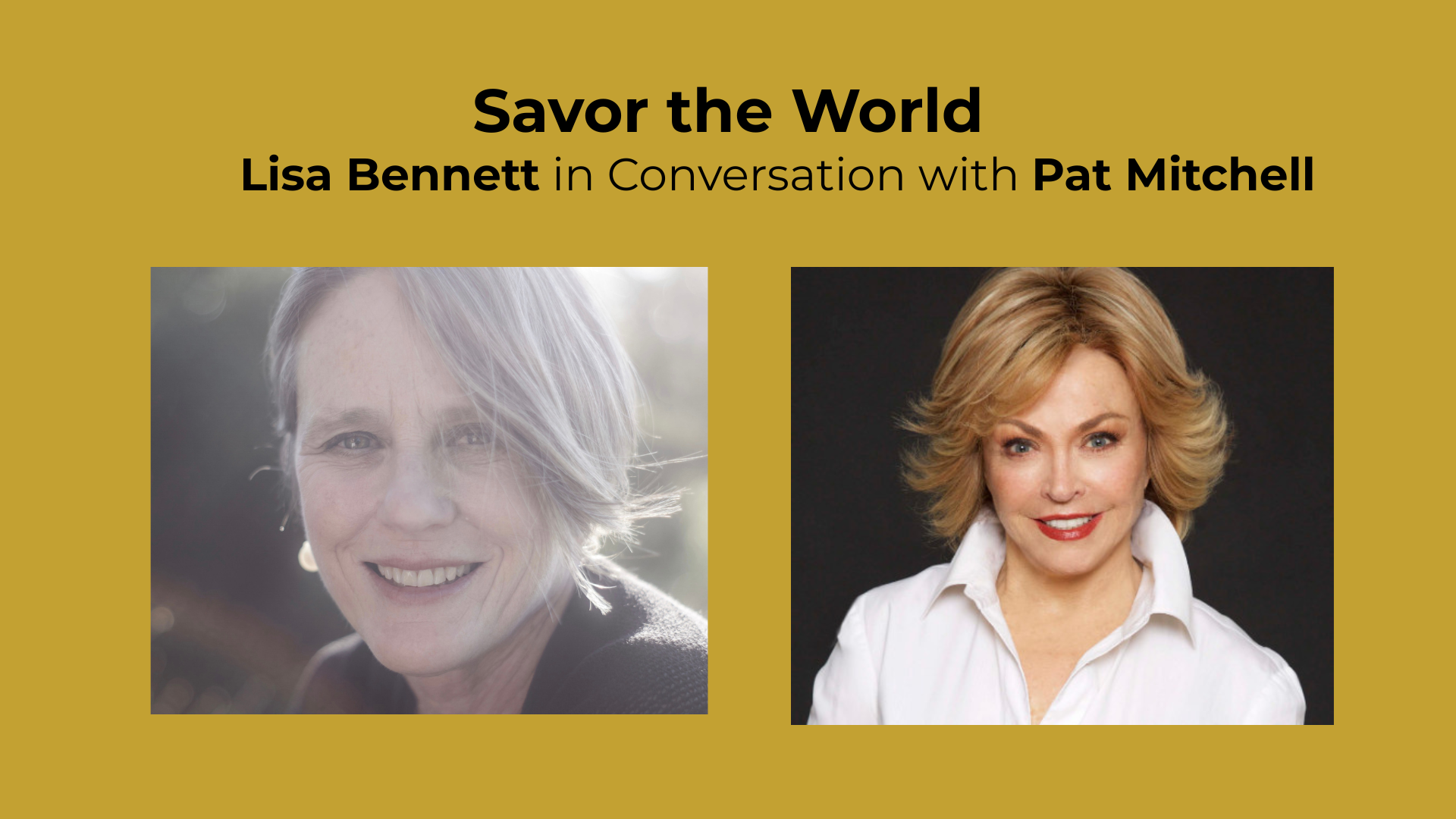
(You can also listen to the full conversation here.)
Leading with grace. I love the concept of navigating challenges with grace, and I really hope I can do that and learn more about it every day.
Grace, for me, translates into acting with more compassion and kindness, and if we did more of that with each other and in our work, I think things would be much better.
Strength in connection. I get my strength from other women, and that’s why convening other women, while being in community with other women leaders, is so essential to my sense of well-being and hope, but it is also, if you will, a testament to how change happens.
Storytelling as a tool for change. Storytelling is our biggest tool for change, and that’s not just about change in the world; it’s about change in ourselves. When we bring women together, one of the first things we do is share our personal stories. That gives us a common ground, a place to start, no matter how distant our life journeys have been. Once the personal stories are told, the other stories start to emerge: experiences that have defined our work, helped us get over a bad time, or helped us achieve a goal. And then, we start to share the learning—and out of that, absolutely every time comes this deep, deep connection. That connection is what sustains usafter we leave.
The value of an “OG” perspective. I’ve always had this need to do something to help ‘save the world, and you have too, clearly, and it can start to feel overwhelming when you’re living in times like this one. I sometimes despair at having to go make those same arguments for reproductive rights, for women’s leadership. But we remember when things got better. And what’s on my mind now is being one of the OG—the “Old Guard”—a term I learned from my grandchildren. I’ve been in this fight for decades, and being able to do that with energy, passion, faith, and belief that we are going to make progress does keep me going.
On young people and the need to reclaim hope. The younger generation desperately needs to reclaim hope, and I’m seeing it slowly happen. I’ve seen this generation embracing nature, wanting more time to walk among the trees, and gaining a better understanding of the connection between mental and emotional well-being and the pleasures of this bountiful Earth. And since they’re reclaiming that, or maybe seeing it for the first time, I think it’s restoring their spirits to believe that they can and must make a difference.
To retreat is not to retreat. When I first told Mary Robinson that I was going to do the retreat in Mexico and I wanted her to come, she said, “I do not do retreats.” And I thought, of course not. She’s been the president of a country. She was a U.N. High Commissioner and former Chair of The Elders. Of course, she didn’t think there was time for or need for a retreat.
Now I realize “retreat” is the wrong word. It’s really a time of restoration because we are not retreating from the world. We are restoring ourselves to return to the world better prepared, better rested, more optimistic and hopeful, because we have had this experience of community.
Savoring the world.
We need work that, to your point, is not just about saving the world, but savoring the world. If we don’t get in touch with that from time to time, then it’s really hard to keep up the fight, to keep up our spirit, and do it again and again and again.
Joy and problem-solving. In the new film about His Holiness the Dalai Lama (The Wisdom of Happiness), he argues that we can’t address what needs to be addressed without much more compassion and kindness, because that will give us joy. And if you’re feeling joy about what you’re doing, you’re not going to get burned out, get down and depressed, or feel overwhelmed.
If you take time to admire the beautiful trees and the flowers and the rivers and all the things that are part of what we’re trying to save, if you take time to savor them, you’re actually going to feel stronger and better and more resilient and better prepared to actually do the work of saving it.
Daily practices. I am trying to learn to meditate. I’m pretty much a failure so far. But I am trying because I think it’s good for me. I love to dance. If I can put on music and move, that will quickly get me from a burned-out moment to a joyful one. I’m taking singing lessons. I’m trying to do the things, as you suggest, that are about savoring life and the world a bit more, and it is when I tap into those practices that I do feel more resilient for the work. There’s no question I do.
Lisa Bennettis the author of the forthcoming Savor the World and coauthor of Ecoliterate with Daniel Goleman. She offers talks, workshops, and advisory relationships that support the work of mission-driven organizations.
Please reach out if you’d like to learn more—or receive the new Savor the World guide.