The Power of Emotional Honesty
A Conversation with the Founder of America’s First Climate Museum
I’ve spent a fair amount of my adult life feeling angry, sad, or grief-stricken about the seeming abundance of destructive injustices in the world.
I’ve also spent much of my adult life feeling immense happiness, joy, and gratitude about the even greater number of life’s wonders.
These often felt like competing truths—not truths that could co-exist.
But what I have come to learn is that the art in living through complex times like these is in making space to hold it all. The good, the bad, and everything in between.
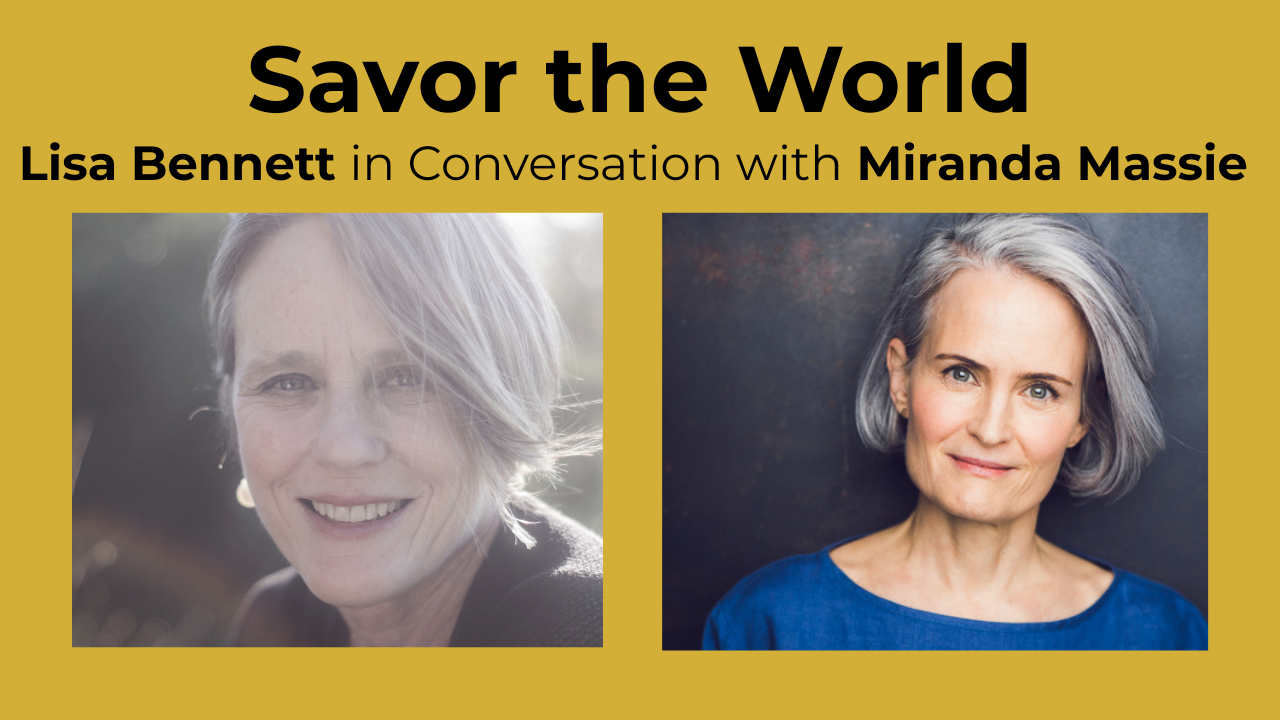
Miranda Massie, a former civil rights attorney and Founder and Director of The Climate Museum, understands this well. The museum, which is currently scaling up to a permanent location, has already been transforming visitors through temporary installations staged around New York City.
“It’s just magical to have somebody come in freaked out about climate and walk out 45 minutes later with a completely different energy: one of possibility, agency, and a determination to lean into their own circle of trust, influence, and connection,” she says.
The key: Not suppressing any of it: the tough emotions or the uplifting ones. And not ignoring positive uncertainties amid so many negative ones.
Holding it all, in other words, is about weaving together savoring and saving the world—and creating something more powerful and transformative as a result. Something that helps us both sustain ourselves and engage others.
“It's painful to confront the truth of what's happening to people, to the web of life, and to social structures,” she says. “If we can't counterbalance that with cherishing what's precious and a vision of positive futures, it's hard to gather the emotional wherewithal to do this work on a day-by-day basis.”
[Listen to the whole conversation here. Read highlights below.]
Holding Negative and Positive Emotions
Embracing the truth of one’s emotions is central to moving forward.
For Massie, that means not suppressing what is hard about facing the climate (or arguably, any) challenge—not turning away out of a sense of bitterness, even though there is plenty to be angry about.
Susan David, whose research on emotional agility has influenced leaders and organizations worldwide, found that pushing away difficult feelings doesn't protect us. To the contrary, it undermines our resilience and our capacity to perform.
But embracing the truth of emotions also means not turning away from joy—including the joy that comes from doing meaningful work at this exceptionally consequential moment in history.
“It’s important to find ways to focus on the impact that you're having and to savor what a gift it is to be able to help somebody find their footing and feel like more of an agent of positive change,” Massie says. “It can get you through a lot of grant rejections and broken pipes and what-have-you.”
Moreover, she adds, “if you can hold all that in yourself, and be conscious of creating space for it for other people, then you really are meeting people where they are and helping them find their own agency.”
The power, as she observes, is in doing both, not one at the expense of the other.
Envisioning Negative and Positive Uncertainties
If you listen to the recording, you’ll get a sense of how much I enjoyed this conversation. But if I had to choose one point that stayed with me the most, it is the power of envisioning not only negative uncertainties but also positive ones.
“I see climate change as completely bound up with the world economic system and as completely bound up, therefore, with questions of justice,” says Massie, “and how we can create futures that are regenerative, rebuild those relationships, and stave off the worst of climate change.”
“Any of that and all of that,” she adds, “can sound completely pie-in-the-sky, until you stop and consider how so many extraordinary events in world history would have been unthinkable even 10 seconds before they happened.”
Massie is referring to the hindsight bias, which the psychologist Daniel Kahneman explored in Thinking, Fast and Slow. Once an unlikely event occurs—David slaying Goliath, the Berlin Wall falling, the Supreme Court upholding same-sex marriage—it suddenly seems inevitable, even though we may have been unable to imagine it before.
“I think it's really important in this moment of radical, deeply felt negative uncertainties that we all recognize there's a whole reflected world of positive uncertainties that are also there,” says Massie. “We're less conscious of them for a whole variety of reasons, but they're just as profoundly present as the negative uncertainties that we're more aware of on a day-to-day basis.”
A Simple Practice: Envision a Better World
I asked Massie what simple practice she uses to sustain herself in tough times.
“When I'm doing well,” she said, “I imagine one of millions of safe and just futures that can lie ahead, and I picture myself and different people I care about—sometimes people I don't know, often people I do know—in that world.”
“In today’s world, we can't step away from the challenges for long,” she added. “They're going to come knocking soon after you're done with your 10 seconds,” she says. But taking that time—to counterbalance them with a vision of better possibilities—will give you a new perspective on how to tackle them.
What Massie is describing, I'd argue, is a savoring practice: the deliberate, conscious act of attending fully to what is good, or could be.
Consider asking yourself: What are you not letting yourself feel — in either direction? What grief may you be holding at arm's length? What possibility may you be dismissing as naive? And are you making space for others to explore their truth?
That is the power of weaving the practice of savoring the world into the work of saving it.
Because the good and the bad are not competing truths. They co-exist. And when we let them—in ourselves and with others—we become more capable of continuing to do meaningful work in these challenging times.
Learn more about Savor the World capacity-building workshops.
Subscribe to “Savor the World” on Substack.
Check out more videos on the YouTube channel, Savor the World.